Saturday, June 25, 2011

Sculptor uses Nature as his Inspiration


Animals and flowers are tucked into every corner of Paul Cummings' house. The creatures are not real, but cast in marble, alabaster, soapstone and wood. Using a chisel and mallet, and sometimes an air hammer, Paul uses nature as his inspiration and creates art that is not meant to be realistic but creates an intimate, friendly display.

Paul took up the art as a child growing up in North Fond Du Lac, Wisconsin. When he was 12, he used a pocketknife to carve wood and turned it into wooden birds. His craft was carefully nurtured over the years and he is an artist for more than 50 years. Paul specializes in stylized animal forms, but had the opportunity to study many aspects of art, including watercolor, acrylic and oil painting, and three dimensional design next to wood and stone carving.

In the mid 70's, Paul began teaching stone and wood carving in the Palm Beach County Community Schools. This continued for a number of years as he expanded the stone and wood carving classes to his country home. He had 10 acres of woodlands and therefore plenty of space for an outdoor studio. In 2002 he moved out of the country and into the city and had to find a new studio space for teaching classes. He rented a building at a friend's local farm and was able to contiune classes. Pieces of his sculptures are found in many private and public collections in Florida and elsewhere.

Paul has not only a passion for carving but is as well a naturalist and outdoor enthusiast. He is a memmber of the Florida Trail Associations' Loxahatchee Chapter and part of a group of volunteers instrumental in trail maintenance in State Parks and other public lands. A remarkable milestone in 2011 is the celebration of 20 years of leading the annual "Big-O" hike around Lake Okeechobee on Thanksgiving week. What a great accomplishment !

Find pieces of art by Paul Cummings on worldtravelart.com.

Note:
Paul is working on one of his latest pieces on the picture shown. It is a sculpture showing a women looking at a birds nest, with a baby chick showing its head out of one of the eggs.


Saturday, May 14, 2011

Haitian Steel Drum Metal Art

Haitian Metal Art; a process of turning steel drums into unique, intricate works of art.

This art form was born in Haiti in the early 1950 by a simple blacksmith, Georges Liautaud. He repaired tools and created primitive metal crosses for the graves in the Croix-des-Bouquets cemetery. An American teacher encouraged him to expand his talent into the creation of decorative metal art pieces. A few highly gifted craftsmen apprenticed under him and the tradition has continued since.

Croix-des-Bouquets is still the center of Haitian Metal Art. When driving through the primitive streets, one can hear the "tink-clank-tink" coming from the homes of artisans.

Most artists purchase the used metal drums near the port in the capitol of Port au Prince. In order to turn a steel drum into a unique, intricate work of art, the barrel is stripped of its top and bottom, filled with dried banana or sugar cane leaves, and then burned for quite some time to remove the residue of the drum's former life.

Once done and cooled, the drum is sliced from top to bottom. By entering the cylinder and using body pressure it is opened and pounded into a perfectly flat surface. With a stick of chalk, the artist then draws the design onto the "metal canvas". With the use of hammer, chisel and other tools, the piece is cut, shaped and contoured to its completion. The final piece is coated with a protective finish and some of the products are hand painted in bright colors.

Steel Drum Art is a great and innovative concept of eco-friendly art. By supporting this art form and by introducing new designs and new market outlets, artisans are enabled to have a sustainable income in the poorest country of the American Hemisphere where unemployment is estimated at between 60% and 80%.


Monday, May 2, 2011

Explore Fair Trade

What is Fair Trade ?

Fair Trade is a trading partnership, based on dialogue, transparency, and respect, that seeks greater equity in international trade. It contributes to sustainable development by offering better trading conditions to, and securing the rights of, disadvantaged producers and workers . (FINE, 1998)

In Fair Trade, artisans are being paid a fair price for their goods and receive up to 50 percent in cash advance when an order is placed and the balance when the order is shipped. A long-term relationship and continuity of orders is maintained so that the artisans can plan for the future.

Fair Trade ensures that the products offered are produced ethically and that quality and consistency meet the buyer's expectations. Fair Trade products keep cultures and traditional production techniques and materials alive by adjusting to modern and current trends.

Who started the Fair Trade Movement ?

Fair Trade traces its roots to 1946 when Edna Ruth Byler, a volunteer for Mennonite Central Committee visited a sewing class in Puerto Rico. She discovered the talent the women had for creating beautiful lace and the extraordinary poverty in which they lived despite their hard work. She began carrying these pieces back to the United states to sell and returning the money back to these groups directly.

The first US based Fair Trade shop opened in Pennsylvania in 1958 and in the late 1970s, US-and Canadian-based entrepreneurs who defined their businesses with the producers at heart began to meet regularly, exchange ideas, and network. This informal group would evolve into the Fair Trade Federation and formally incorporate in 1994.

In 1989, the World Fair Trade Organization was founded as a global network of committed fair trade organizations, aiming to improve the livelihoods of disadvantaged people through trade and to provide a forum for the exchange of information and ideas.

Since 2000, fair trade sales and consumer awareness have increased tremendously, as the range of fair trade products has also expanded.

Get Involved
  • Entrepreneurs, citizens, students, educators, community leaders, and many others remain the backbone of the fair trade movement (following tips and links are from the Fair Trade Federation website).
Fair Trade in Your Home
Fair Trade in Your School
Fair Trade Your Meeting
  • Whether it's a conference for 800 or a small team-building workshop, you can bring Fair Trade to your meetings.
Fair Trade in Your Workplace
Fair Trade Travel
  • The Fair Trade Federation offers a variety of opportunities to meet and interact with fair trade producers while enjoying a unique vacation experience.
Since 2002, people in more than 80 countries have set aside the second Saturday in May as World Fair Trade Day, the first global campaign for the Fair Trade movement connecting producers, businesses, and customers around the world.

Thank you for supporting Fair Trade!


Thursday, March 17, 2011

Bark Cloth Art of Samoa

Siapo, also known as Tapa in other Pacific Ocean Islands is a bark cloth and one of the oldest and important symbol of Samoan cultural art forms. Special occasions such as births, funerals and weddings call for the presentations of Siapo. The preparation process involved in the materials used to create the cloth is an art itself.

The canvas of Siapo is the bark of the Paper Mulberry Tree. People have bunches of them growing in a corner of their plantations and the tree stalks are carefully tended so that they grow straight with very few branches. The tree stalk is harvested when it is about ten to fourteen month old or approximately one to two inches in diameter. The two layered bark is then stripped of the stalk in one even pull using a sharp knife. The soft inner bark (called bast) is separated and dried in the sun before being soaked in a bowl of fresh clean water to keep moist. The tough outer bark is discarded.

The next step is scraping with three different clam shells. This process removes the remaining bits of bark and green growth and softens and spreads the fibers. Then the narrow strip of bast is placed on a wooden anvil and pounded by a wooden beater. The beating process causes the bast to flatten and gradually spread out to become wide, thin pieces of cloth. The unfinished cloth is then being weighed down with stones to dry and bleach by the sun. Various strips are pasted together with arrowroot paste to create the various sizes of Siapo. Now the cloth is ready to be decorated.

Two techniques are used in creating the designs. The rubbing method called "siapo 'elei" and the freehand method called "siapo mammanu".

Siapo 'elei uses a design board called "upeti" to imprint on the bark cloth. The "upeti" has been covered with dye and an unfinished cloth is placed on it. The top surface is then rubbed to transfer the design from the board to the cloth. In the Siapo mamanu method, each design or image is hand painted on the surface.

The dyes used in decorating Siapo are derived from a number of plant sources as well. "O'a" is the brown dye and the base for all other dyes. It is extracted from the bark of the Blood Tree. As "o'a" ages, it darkens. It starts as a pale tan and matures into a rich dark brown. This dye is mixed with black dye, or "lama" that is made by burning the nut of the Candlenut Tree, "loa" the bright red dye made from seeds of the Lipstick Tree and "ago", the yellow dye made from Turmeric Root juice.

Traditional design elements used in decorating Siapo are typically plant or animal motifs or other images from Samoan life.

Tuesday, February 22, 2011

Morocco, Part 2

Well, the last time we were together, I was recommending to GO NOW before it is too late. You might want to hold off on to buying that ticket for a little while longer. It seems that the flames of "freedom" are spreading to some of the countries that don't have quite the same issues but feel that a little revolution can shake things up. Let us hope it all settles for the best. Not just what is the best for tomorrow but what is the best for the future. Where will the North African region be in two weeks, two months and in two years? Hopefully for the better.

I wanted to return again to our October trip to Marrakech. Except for the burning down of the police station a few days ago, I would fly tomorrow as such was the positive jolly old soul the Djemaa el-Fna square has at night.

As in many cities near the equator and the hot lands of the world, when the sun goes down the inhabitants come out. The air is refreshing now. The breezes start as temperatures shift back towards the sands as they cool. Stars appear overhead and there is a sense of welcoming for the evening ritual of preparing the last meal of the day and the chance of making just a little more business. The souk or market in the old city center has been trading for as long as the first two occupants held something cherished that the other wanted. Walls lean against each other in communal support for the common goal of providing a roof over the latest generation of marketer. Fez has a more ancient feel with its narrow warren of streets and no machine driven transportation, but here in Marrakech that old hippy nirvana is still clings on.

In most of the third world cities night is not the place for the foreign traveler. Sure, there are those few restaurants and places to go to have a coffee or now check the internet, but security was always an issue in many of them and you traveled warily. Walking in the middle of the streets to avoid the alleyways, stripped of any goods and with perhaps some sort of shiv buried not too deeply in a pocket. But here it's different. This is not Nairobi or Managua or Detroit. Folks here know how to trade and know that a safe environment keeps the foreigners all happy chappies. Dark market alleyways are still best heeded as a potential hazard as they are now only filled with smells as the sounds and fury of the day's shoppers are gone. But, for the adventurous of us, if you keep a quick eye and use some common sense and don't play the part of the wondering lost there are experiences to be had.

It always seemed that showering off the dust of the day resets one's agenda. We strip off our valuables only taking enough dirham for our meal and prepare for an evening of dining in the square and perhaps a quiet walk through the market area. Most of the vendors are shutting down but as has happened three nights so far someone has to run back to the hotel and get cash. You think we would learn. And so it happened again. This fine evening dinner was had at Achmeds and his family tent in the main square. D and I had decided to take a new tack and headed off to work off the night's fare of merguez sausages grilled with olives in spicy tomato puree, fresh kalimar and fresh bread.

We had perhaps looked through a thousand shop windows in the last two weeks traveling back and forth through our part of the country. These nights were saved for the antiquities whether real or imagined but with a learned eye and good hand you can normally separate them out from yesterday's latest contrivance. As we strolled through the covered market walkways, we came to a junction and while we waited for it to tell us the way, we saw in front of us a small curtained window filled with those types of curios that demand a closer look. Glasses were taken out of pockets and fitted as we leaned closer in inspection. Here were two small brass hammers in scripted with carvings and symbols that we soon discovered were used by caravans for breaking up salt and sugar crystals, camel bags from the Touareg hung from the inside walls and all kinds of odds and sods that demanded more than a quick cursory glance. The owner of the shop came out and, of course, asked us in. We immediately said that we were just looking. Of course, he knew better as did we and as his window was so intriguing, we could not say no for very long. We all knew as we crossed his threshold that we had started the first step of the negotiation, even though we had not held anything in our hand and as decided a few hours ago, we aren't buying tonight...right?!.

We entered and immediately saw that here was something different, D found a pair of small brass writing stylus. Whether or not they were made yesterday or 200 years ago, they had to be included in whatever the endgame would be that was just gaining momentum. A signet ring with the seal carved out of lapis lazuli was next as it was taken out of a dirty cloth bag that stayed hid normally underneath a small three legged stool. It was made of silver and stood proud an inch above D's hand. Now if only we had a letter to sign and seal to the Khalif.

Twenty minutes passed onto thirty and we felt we had seen it all . We started to discuss in our mix of Marrakechi which is filled with English, French, Spanish and all other words and hand signs that any of us might have heard or seen that related to what we were about to do. We know how to do this, we thought. We say we don't really want it but he knows better as the item we are now trying to put back in its place have been in our hands the whole time. We are sunk, lassoed, tied and branded, hooked lined and sinker'd and we all know it. It was just a simple matter of what was it going to cost us to get out. He will say A, we will howl in pain and say Z, he will cut his wrists and writh in dignified agony and propose F, we will counter with an R and finally meet as best friends as the last business of the day around either side of an M. Simple, it just takes time, some mint tea and more time. A time honored repast and a terrific gentle way to spend an evening.

We mumble our strategy back and forth in pig Latin and can see our way out when he deftly changes direction. In a voice filled with all cunning innocence, he says "I have another shop with even more interesting goods just around the corner". The crafty soul. We are gaffed and filleted. We have no chance now as we exit and he locks the door and leads us down some recess into the bowels of the souk. The unknown is what causes us to travel and this night was not yet to be done. We left with our brass stylus and our proud silver signet ring and followed our man down through the night market alleys to his other shop and there we found.....him.

To be continued.


Monday, January 24, 2011

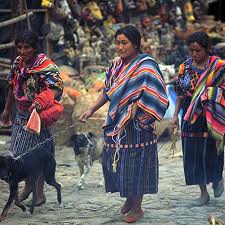
Mayan Costumes of Guatemala


Weaving is one of the oldest Mayan skills and was practiced eons before the arrival of the Spanish. In Pre-Colombian times, the majority of the Mayan population were thought to wear long white cotton tunics, but after the conquest, wool and new dyes were introduced and the Mayan developed their unique textiles and garments.

Most present-day Mayan people live in the rural areas of Guatemala. Their costumes, like so much else in the Mayan world are not simply a relic of the past but a living skill re-created by each generation and each village and varies from one side of a mountain to the other.

The traditional costume worn by women is the huipil, a loose fitting blouse usually made of two panels of cotton fabric. They are woven on a backstrap loom with complex patterns and decorative embroidery and joined together along the sides without separate sleeve sections.

Mayan women do wear a skirt or corte with the huipils. They are made of loomed fabric up to five meters long and joined to form a tube into which the women step. The skirt is secured by woven sashes in bright colors and intricate patterns.

Contrary to the Mayan women's costume, today men's traditional costume is worn in only a few villages. Their clothes include superb weaving and designs and consist of pants, shirt and sashes in spectacular colors and imaginative patterns. The shirts and pants are usually machine stitched and decorative hand-woven collars are used to personalize the shirts. The pants are calf length with wide, straight legs and often embroidered with beautiful designs. Only the Mayan men carry tightly woven shoulder bags or mesh bags.

Although fewer men wear traditional costumes, the styles that remain are spectacular and diverse. The tzute is arranged as a head covering and additional tzutes may be worn over the shoulders. The tzute often marks an important member of the village.

The designs used in the traditional Mayan costume of both men and women are as diverse as their ancient history and provide a delight for the eyes for the adventorous traveler.


Monday, December 20, 2010

Go Before It's Too Late


Morocco Oct - Nov 2010

The world is changing. This is not a discourse on how the technology revolution has taken over most of the planet, but maybe it is. What I mean with "go before it's too late" is the end of an era and the disappearance of the generations that have lived through the big changes. I am sure it is.

These first nights walking around near the Djemaa el-Fna square in central Marrakech, which has entertained travelers and the locals for a thousand years. As D and I enjoyed the cooler night air we watched three generations of a family of women walk by arm in arm. Grandmother wrapped in her djellaba which covered her to her ankles, her head and neck covered in a khimar and her nose and mouth was barely visible behind the modest veil. She was talking quietly to her daughter who is dressed in nice slacks, a plain blouse and a light jacket. She has as well her head covered but has no veil and on the end of the mother is the daughter. Perhaps 14 years old with tight jeans and a tee shirt that is short enough to almost see skin on her midriff and looking away with those ubiquitous signs of teenage aloofness...earphones. Sure she did not have the latest I-whatever it is, but it's just a matter of time.

The end is near. The end of the patient artist that would sit and embroider the beautiful pillow cases we bought which have to be called vintage because no one is doing them like that anymore and they are all old. With the advent of technology time starts to accelerate and as it does there is no time for simple things. Watches show that it is later than you think.

Where will the grizzled old men with their turbans and knives tucked in their belts come from ? Their sons now load camels into trucks to take to shows. Who is leading a caravan when you can ship in tons with a Kamaz truck and just fill it with diesel. It has no personality. It does not turn its head when you say its name.

My friends, go now !
See the old world because in 20 or so years it will be gone. I am sure Ayoud's father that we shared mint tea with won't be there for many more years. The coarse tobacco that he smoked for decades even though cooled in the scented water of the hookah decided to stay. His lungs and he are paying the price. The time will come soon when we really have only Nat Geo books laid out for visitors to stare at unbelievingly. Like re-enactments of the battle of Gettysburg, the players will look at their watches and see that it is time to change into traditional clothing and perform for the tourists.

I sat on a short milking stool in the Djemaa the other day and under the partial shade of a well used umbrella I succumbed to the guile and call from a street artist wile I had a Berber design painted on my foot to surprise B. The lady who painted the henna in flowers and swirls had been doing this since 1971. We talked about the hippies back in the early seventies and how change had come to her world. Got married. Had a couple of kids. Took the ferry from Tangier to Spain and lived a back and forth live for eight years till the foothills of the Atlas called her home. As she dipped her stylus in the brownish ink and expressed her imagination, she contently called to the foreign women of all ages as they passed, knowing by their dress and their walk whether to call out "meine liebe Frau" or "hola, que tal ?"..."henna painting, bom precio". Most walked by but she made a good living according to her and was happy to be in her town. "I will die in the square" she said, "and be happy to do it".

Yes, brothers and sisters, the times they are a-changing .

Stay tuned for more from Morocco.